Browsing: Lebrecht Weekly

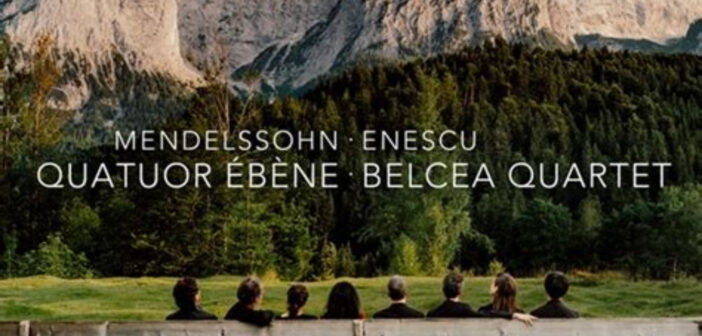
What happens when you put the two finest living string quartets in a room and press ‘record’? Not a punch-up, obviously. These players need to protect their hands. The outcome, let me reveal, is a cross between a pub quiz with two teams of Nobel prize-winners and a fight for the lower bench in a Finnish sauna. Steamy, competitive and sharp as scalpels. The Belcea Quartet was founded in London 30 years ago, the Ebène came to attention in France a decade later. When they join up in the Mendelssohn Octet there is an edge of we-can-play-faster-than-you versus we’re-more-experienced-and-much-lovelier. I…
Share:


It would have been Ida Haendel’s birthday this week.  The prodigious violinist showed me three different birth certificates but all agreed on December 15, and we think she would have turned 100 last year. No-one alive today plays like her. Raised in Warsaw Ida studied in London and settled in Montreal and Miami. Among fellow-violinists, she revered Jascha Heifetz and adopted his signature concertos – Sibelius and Walton – albeit with very different interpretations. There was a warmth, and wit, in Ida that Heifetz could never attain. The double-album under review contains four of her warhorse concertos performed with the…

Share:

It has been a year of Goldberg Variations – Yunchan Lim, the end of Vikingur Olafsson’s world tour, Mahan Esfahani on harpsichord, a two-guitar version on Warner, a trio version from Evil Penguin, a quiet contemplation recorded in Ely Cathedral. Most of these albums will be talked about for years. But the choice of record of the year is not just about posterity. It’s about an idea that changed our minds. It might be a concept album, like Anna Fedorova’s interweaving of Gershwin with French swing, or a forgotten stage musical like Kurt Weill’s Love Life, or the demarginalization of…

Share:

One of the most vivid portraits of Gustav Mahler was written by a fellow-Czech who, like Mahler, was a wage-slave in 1890s Hamburg. Mahler was paid to conduct 120 nights at the opera without having any say in the artistic direction. Foerster, whose wife Berta Lauterer was Mahler’s star soprano, found work as a music critic while composing unplayed orchestral scores. Mahler found friends to pay for a premiere his second symphony in Berlin. Foerster’s was unperformed. When Mahler became head of the Vienna Opera in 1897 he sent for Berta to join his stellar cast and helped Foerster find…

Share:

I was almost put off listening to this album by a cover note announcing that ‘Shostakovich was known for his fun-loving attitude during his early years as a composer’. A fun guy, right? In his first decade as a composer he was too busy to have much fun and any time later he was oppressed. Any humour he showed was of the gallows variety. What we have here is a clutch of film and theatre music, some of it reconstructed by the conductor Mark Fitz-Gerald. None is top-drawer Shostakovich. Interludes to Bezymensky’s 1929 comedy The Shot veer between reckless experimentation…

Share:

In the days when records had two sides and plane tickets were paper booklets, the Grieg piano concerto would get paired with the Schumann on new releases and the Ravel G major with his own left-hander. These twins sat together on LP like Cav and Pag at La Scala, a reassurance of balance and normality. Nowadays, two concertos would be considered short measure. Digital albums have room for more. So the Ukrainian pianist Anna Fedorova has twinned the Ravel concerto with George Gershwin’s Rhapsody in Blue and has filled the space in between with a cornucopia of surprises under a…

Share:

Schubert, in the final year of his short life, feared he was dying and hoped he was not. Some doctors thought his symptoms were neurotic (this was Vienna, after all), others suspected a consequence of his mercury treatment for incurable syphilis. Schubert, 31 years old, kept on composing between bouts of vomiting, headaches and excruciating pain in his joint. Among the awesome outpouring of 1828 are the great C major symphony, the unsurpassed string quintet, three last piano sonatas and the so-called ‘Swansong’ song cycle. Apparently trivial by comparison are four works for piano duo, intended for home use. They…

Share:

Some of us remember a time when November landed with a thump of label adverts, big wodges of glossy pages that promised nirvana in the form of symphonic cycles from eminent maestros and piano sets from timeless immortals. Yeah, so last century… All we have now is a flutter of ephemeral pianists in concept albums of music that does not necessarily feel fully conceived. Such is the case with the Icelander Vikingur Olafsson, a thoughtful man who tackles large themes – one year Debussy and Rameau, another Mozart’s contemporaries. Olafsson has spent the last two years touring Bach’s Goldberg’s Variation…

Share:

A failed Broadway musical by Kurt Weill arrests my attention. Reading that Weill deemed it ‘pregnant with possibilities for the non-realistic theatre’, I cancel all calls. Weill and librettist Alan Jay Lerner had an idea of charting American marriage and working life from 1791 to 1948, a plan far too ambitious for Broadway. The show closed after just seven months and was not seen again for seven decades until a German revival in 2017 and the present concert staging in Leeds earlier this year. Love Life had a lot stacked against it – a first-act show-stopper called ‘Economics’, an English madrigal…

Share:

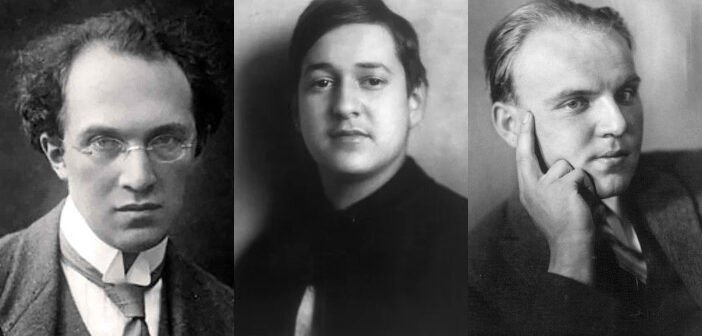
Pick ‘n’ mix albums hardly ever work, and for the same reason that it’s unwise to get into a hotel lift with three composers. None of them will make way and the last one in will invariably come out first. What we have here is three phenomenal composers whose common denominator is that they wrote hugely successful modern operas that were banned by the Nazis. Franz Schreker dragged operatic sleaze one brothel and decibel beyond Richard Strauss in Salome. The overture to Schreker’s 1915 opera Die Gezeichneten (the branded) is an attention-seeking sonic synopsis, sweetly (and not too noisily) played here…

Share:
1 2 3 4 57