
This page is also available in / Cette page est également disponible en:
 Français (French)
-
Bru Zane4
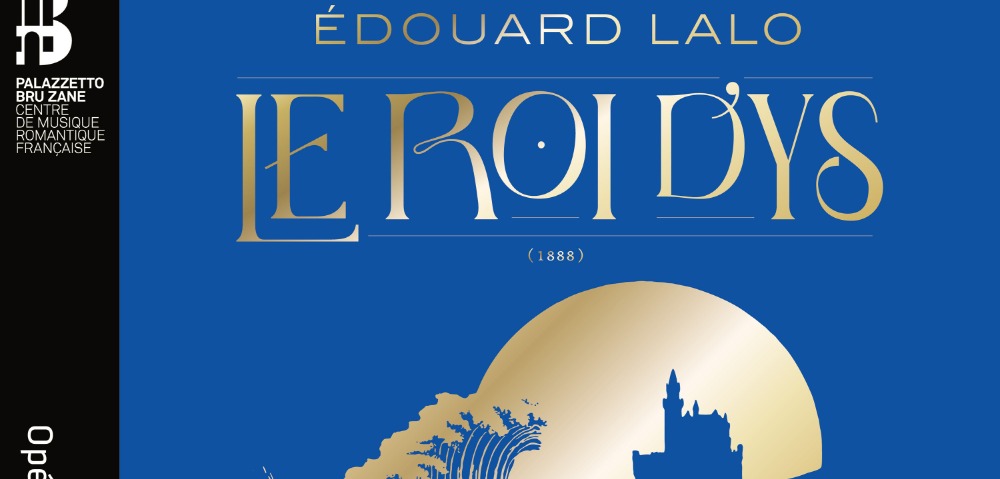
Lalo: Le Roi d’Ys
Judith van Wanroij, soprano; Kate Aldrich, mezzo-soprano; Cyrille Dubois, tenor; Jérôme Boutillier and Christian Helmer, baritones; Nicolas Courjal (bass); Hungarian National Philharmonic Orchestra; Hungarian National Choir; György Vashegyi, conductor
Bru Zane, 2025
Édouard Lalo’s opera Le Roi d’Ys had a somewhat tortuous journey to the stage before premiering at Paris’s Opéra-Comique in 1888. In the intervening 10 years between its composition and premiere, Lalo pared it down from the traditional five acts with ballet to a very tight three-act structure lasting only an hour and 45 minutes. Also, unusually for a work that played at the Opéra-Comique, the piece lacks spoken dialogue and, instead, is through-sung with accompanied narrative passages blending with sung numbers of a fairly conventional sort.
The plot is drawn from Breton legend. The king of d’Ys is at war with Prince Karnak. The price of peace is the hand of his daughter Margared and the opera opens with the preparations for the wedding. Margared has gone along with the arrangement because she believes that the man she loves, Mylio, has been killed in the war. When he unexpectedly appears she calls the whole thing off, precipitating the renewal of hostilities.
Unfortunately, Mylio is in love with Margared’s sister Rozenn, who returns his feelings. Mylio takes command of the forces of d’Ys and is promised Rozenn if he is successful. Margared is not pleased. Mylio is victorious (with the help of Saint Corentin) but Karnak escapes. Margared betrays the city’s secret to him: there is a floodgate that, if smashed, will let in the ocean. At this point the saint appears and Margared repents. The celebration of the Mylio/Rozenn wedding is interrupted by the news that floodgates have been smashed. Mylio confirms this, saying that he caught and killed Karnac in the process. All flee to high ground but the water keeps rising. Margared realises that the waters will consume her and throws herself off a rock. Saint Corentin appears, the flood recedes and all sing a Hymn of Praise.
Musically, Le Roi d’Ys is about what one might expect. It’s rather like something Wagner might have written if he was French and a Catholic. There are repeated themes that are not quite Wagnerian Leitmotifs. The score is quite densely orchestrated, with lots of woodwinds and brass. There are probably more quartets than in a Wagner work and the choral writing has a certain, very French légerité. The opera also really changes gear at the beginning of Act 3. The wedding preparations are written in a much lighter vein. There’s a sort of Breton folk dance and both Mylio and Rozenn get simple strophic airs in rhyming couplets. But then the floodgates break musically as well as dramatically!
This recording features an excellent lineup of singers with suitably contrasting voices. Kate Aldrich as Margared possesses quite a dark mezzo which contrasts nicely with Judith van Wanroij’s lighter, brighter soprano. Cyrille Dubois, as Mylio, is a proper French heroic tenor with ringing high notes, while bass Nicolas Courjal is appropriately sepulchral as the king. Jérôme Boutillier’s bluff baritone is apt for Karnak and the slightly lighter baritone of Christian Helmer doubles up as the knight Jahel and Saint Corentin. The Hungarian National Philharmonic Orchestra and the Hungarian National Choir make excellent contributions. György Vashegyi conducts and keeps the tempi moving—essential in French works like this one to stop textures from getting too heavy.
The recording was made at the Béla Bartók National Concert Hall, Müpa Budapest in 2024. The sound is clean and fairly detailed with a realistic balance between orchestra and voices. It comes with the usual lavish Bru Zane book (97 pages in English and French) which contains a very good essay about the work and some of its peculiarities, as well as first-night notices from the contemporary press and an interesting piece on the “Breton revival” and its influence.
This release is available as two physical CDs or digitally in MP3 and both 44.1kHz/16bit and 48kHz/24bit ALAC/FLAC/WAV versions. I listened to standard resolution WAV. Another well-crafted Bru Zane release of an opera that is worthy of more attention than it gets.
This page is also available in / Cette page est également disponible en:
Français (French)