Browsing: CD and Book Reviews

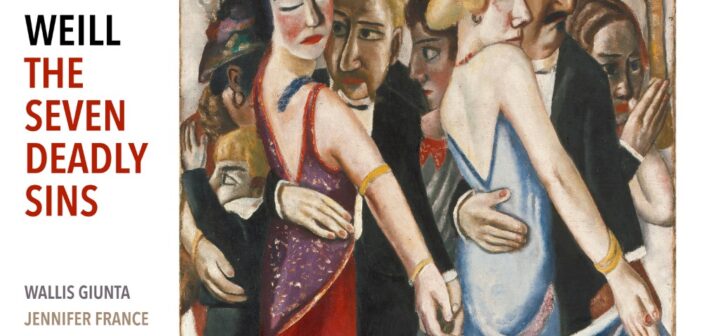
Weill: The Seven Deadly Sins Wallis Giunta, mezzo-soprano; Jennifer France, soprano; Katarina Andreasson, violin; Benjamin Herzl, violin; Swedish Chamber Orchestra; HK Gruber, conductor BIS, 2026 There are actually three pieces on this new SACD release of music by Kurt Weill. All are performed by the Swedish Chamber Orchestra, conducted by HK Gruber, with various soloists. The first and longest is the “ballet with song,” The Seven Deadly Sins, given in the English translation by W.H. Auden and Chester Kalman. It tells the story of the two Annas, who perform, turn tricks and generally misbehave during a tour of major U.S.…

Share:

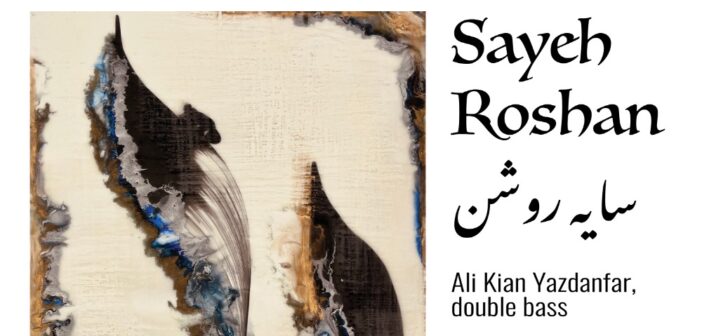
Sayeh Roshan Ali Kian Yazdanfar, double bass; Brigitte Poulin, piano Leaf Music, 2025 Sayeh Roshan is the new project by Ali Kian Yazdanfar and the type of album that can be enjoyed as much by listening to it as by reading the liner notes. The double bass player here puts himself at the crossroads of Persian and western cultures on one hand, and new music and folklore on the other. Along with Brigitte Poulin at the piano, he brings to life new works, most of which were specially commissioned for this project. The composers used for this fascinating blend of…

Share:

György Kurtág: Játékok Brigitte Poulin, piano Leaf Music, 2025 Játékok is one of György Kurtág’s most ambitious projects. The Hungarian composer, who will soon be 100, began the work in 1973, but has never really finished it. In 2017 and later in  2020, he added new pieces to what is now an impressive collection of miniatures in 10 volumes. In the tradition of Robert Schumann’s similar set of short solo piano works,  Kinderszenen (Scenes from Childhood), Kurtág revisits the theme of childhood and creates a wide musical panorama with little hints at the idea of games (játékok in Hungarian). For…

Share:

What if? Joel Miller, saxophones and composition; Ensemble Resonance New Music: Andrew Reed Miller, double bass; Danielle Sametz, violin; Joël Cormier, percussion; Silvio Pupo, piano Leaf Music, 2025 With his latest Leaf Music release, What if?, Joel Miller and his fellow musicians invite us to enjoy a multifaceted musical experience, drawing naturally on his own musical universe as a composer. The first five tracks, written by Miller himself, bring a smile to our faces. Each one is quite distinctive from the others, demonstrating the diversity of this jazz-inspired universe, often set to a danceable rhythm. The only regret is that…

Share:

Ambroise Thomas: Psyché Hélène Guilmette (Psyché), Antoinette Dennefeld (Éros), Tassis Christoyannis (Mercure), Mercedes Arcuri (Dafné), Anna Dowsley (Bérénice), Artavazd Sargsyan (Antinoüs), Philippe Estèphe (Gorgias)  Hungarian National Philharmonic Orchestra, Hungarian National Choir, György Vashegyi, conductor Bru Zane, 2025 In the fall of 2024, Montreal audiences had the opportunity to discover Hamlet by Ambroise Thomas, a somewhat forgotten French composer whose music was met with enthusiasm. It has been a long time, however, since we heard Quebec soprano Hélène Guilmette, who has enjoyed a brilliant career, mainly in Europe, for more than 20 years. This complete recording of the opera Psyché, while…

Share:

Bergeron, Godin — Nuits blanches Olivier Bergeron, baritone; Olivier Godin, piano Leaf Music, 2025 Olivier Bergeron was recently heard at the Festival d’opéra de Québec in a production of Carmen, where he played a supporting role, Moralès. The young baritone is now back in the spotlight with his first album, Nuits blanches, released by Leaf Music. And what better way to make your recording debut than with French mélodies. This repertoire is clearly well-suited to his voice and highlights his greatest qualities as a performer. Accompanied by the distinguished pianist Olivier Godin, a connoisseur of French music, Bergeron immediately demonstrates…

Share:

Philippe Jaroussky — Gelosia! Philippe Jaroussky, countertenor; Artaserse Erato, 2025 The latest recording of Italian cantatas by countertenor Philippe Jaroussky and his own baroque ensemble, Artaserse, is built around two settings of Metastasio’s Perdono amata Nice sometimes referred to as La Gelosia. They are quite different. Nicola Porpora’s 1746 setting is unusual in that it includes a short overture. Its accompanied recitatives and the two da capo arias—“Bei labbri” and “Giuru in nocchier che, al mare”—are quite elaborate and have plenty of additional ornamentation in their A section repeats. Baldasarre Galuppi’s setting was written 36 years later and is in…

Share:

ARC Ensemble: The Chamber Works of Ernest Kanitz ARC Ensemble: Erika Raum & Marie Bérard, violins; Steven Dann, viola; Thomas Wiebe, cello; Joaquin Valdepeñas clarinet; Kevin Ahfat, piano Guests: Wallace Halladay, saxophone; Anna Štube, violin; Joel Quarrington, double bass Chandos, 2025 ARC Ensemble’s Music in Exile series continues to unearth the lost musical treasures of a war-torn 20th century. In its latest instalment, the ensemble has revived the strikingly varied and enigmatic chamber works of Ernest Kanitz—a composer exiled from his native Vienna following the German annexation of Austria. Though Kanitz’s move to the United States was marked by multiple…

Share:

Pidgorna: Invented Folksongs   Anna Pidgorna, composer & vocals; Ludovico Ensemble Red Shift Records In 2012-13 Ukrainian/Canadian composer and vocalist Anna Pidgorna visited Ukraine to record traditional Ukrainian folk music. She used this material as a jumping-off point for her own composition Invented Folksongs. It’s a set of four longish (each 10 minutes or so) songs and two shorter instrumental pieces. These are in no way an “arrangement” of traditional pieces à la Benjamin Britten. The texts were written by Pidgorna herself and the compositions blend some folk elements with music that uses rhythms and tonalities that don’t sound at…

Share:

Staniland: Calamus  Jane Leibel, soprano; Vernon Regehr, cello; Robert Chafe, narrator Leaf Music Andrew Staniland’s Calamus is a setting of four poems from Walt Whitman’s Leaves of Grass.  They are scored for cello and soprano with an actor reading each poem prior to the music. The work is completed by four variations for cello. Each song lasts about six to eight minutes and so, with the readings and the variations, the recording comes in at around 39 minutes. Calamus 6 sets “Not Heaving from my Ribb’d Breast Only.” This is the busiest and most dissonant of the four settings. It…

Share:
1 2 3 4 60