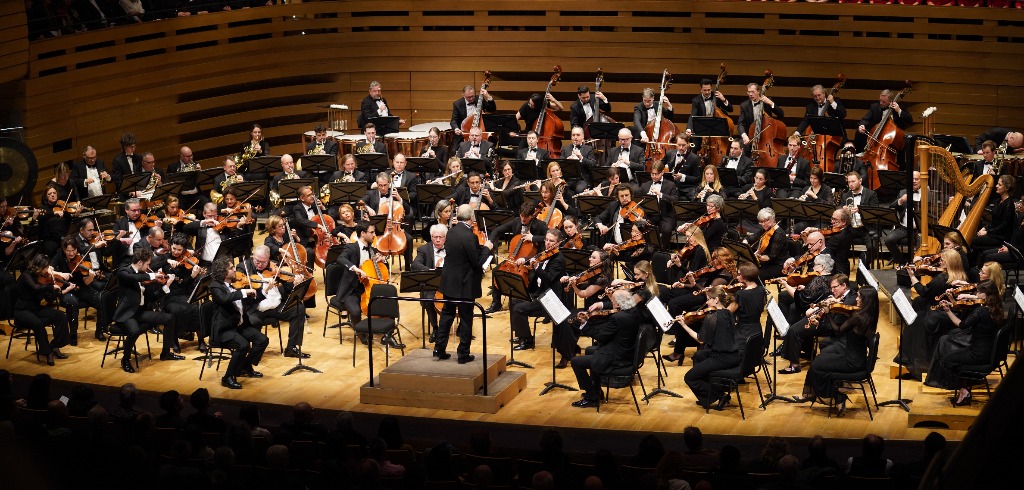
Mahler’s longest, most philosophically ambitious, and second most lavishly scored symphony, in a less than full-sized hall, could so easily have proved too much of a good thing. Not a bit of it.
Among several special—if not unique—features, the Budapest Festival Orchestra is known for its quality of listening: listening to each other and listening to the music. Accordingly, under Iván Fischer’s economical, yet never less than whole-hearted direction, they never pushed sonic thrills across the physical pain barrier or into mere vulgarity. Textures were transparent, the balance against orchestral and vocal solos optimally discreet. The notion that Mahler expanded his orchestral forces as much in the interests of chamber music-like refinement as of overwhelming impact can rarely have been so convincingly borne out.
On Feb. 12, Mervon Mehta, the Royal Conservatory’s Executive Director of Performing Arts, advised us that we were in for 110 minutes of amazing music. In fact, Fischer’s flowing tempi brought the symphony home in less than 100, largely thanks to his concern to keep the long outer movements on the move.
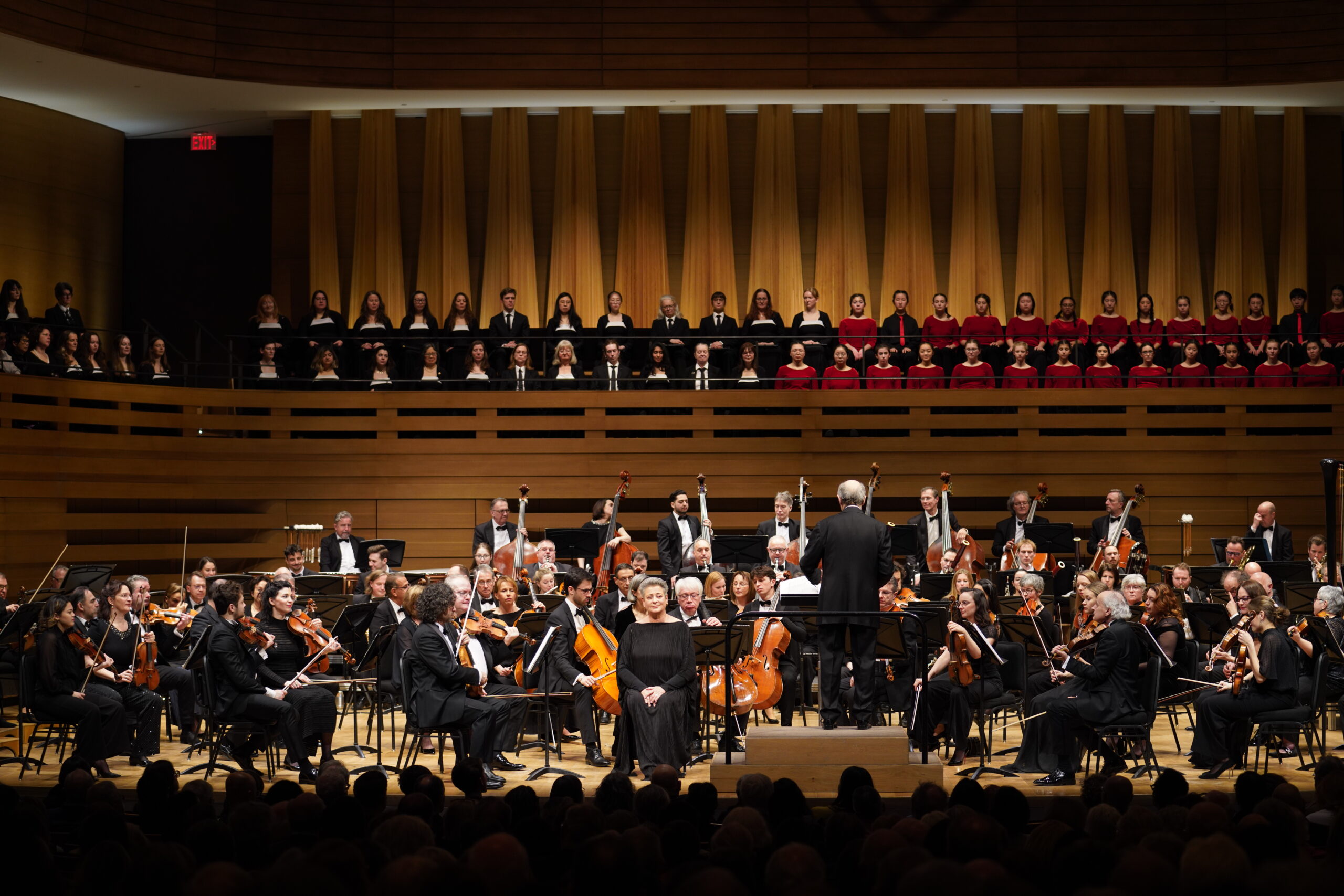
Gerhild Romberger with the Budapest Festival Orchestra, Toronto Mendelssohn Choir & Toronto Children’s Chorus
Photo: Budapest Festival Orchestra/Róbert Zentai
Arguably, there was a price to pay in terms of mystery: knowing where the music is headed is all well and good, but sometimes it’s even better to factor in moments of hesitancy, in order to enhance the revelation of what actually follows. On the other hand, the same seamless onward flow was immensely beneficial both to the players’ stamina and nerves and to the integrity of the overall structure.
Listening forensically, it did take a while for the horns to clear their throats. But by the middle of the first movement—“Summer marches in”—they were in glorious voice. And by then we had heard Balázs Szakszon’s imperious trombone solo, set off by tremendous relish for Mahler’s eruptive bass registers (cellos and double basses in full cry) and by sharp and subtle pointing of the march rhythms. Nor could anyone say that the climaxes failed to register their full panic-ridden effect.
If anything even more impressive were the following two movements. “What the flowers tell me,” sometimes given less than due care and attention, was deft and scrupulous, and “What the beasts of the forest tell me” no less so. Fischer more or less downed tools for the posthorn solo (superbly delivered by a player uncredited in the program), symbolic of the act of listening that was so conspicuous throughout the performance.
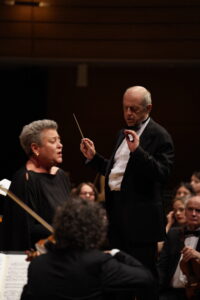
Gerhild Romberger & Iván Fischer
Photo: Budapest Festival Orchestra/Róbert Zentai
German mezzo-soprano Gerhild Romberger took the Nietzsche “Midnight Song” of the fourth movement with richness of tone and immense subtlety of inflection, riding on the most sympathetic of accompanying textures (and for once with a wholly convincing rendition of the tricky oboe portamentos).
Less convincing were the Toronto Mendelssohn Choir and Toronto Children’s Chorus, from whom we might have expected more verbal attack as the Angels and Morning Bells of the fifth movement.
With the finale, “What love tells me,” we were back in the safe hands of Fischer’s firm architectural grasp, compensating for an initial downplaying of the numinous with a clear-sighted momentum towards ultimate affirmation.
Celebrating the conclusion of their North American tour, members of the orchestra embraced each other before leaving the platform. No doubt plenty of us in the audience felt like emulating them. That would have been as just a tribute to their achievement as the unanimous standing ovation they were offered.
For more Budapest Festival Opera’s season, visit www.bfz.hu/en