This page is also available in / Cette page est également disponible en:
 Français (French)
-
Erato5
What happens when you put the two finest living string quartets in a room and press ‘record’? Not a punch-up, obviously. These players need to protect their hands. The outcome, let me reveal, is a cross between a pub quiz with two teams of Nobel prize-winners and a fight for the lower bench in a Finnish sauna. Steamy, competitive and sharp as scalpels.
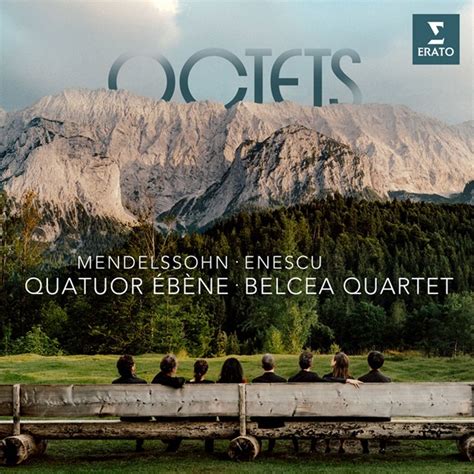 The Belcea Quartet was founded in London 30 years ago, the Ebène came to attention in France a decade later. When they join up in the Mendelssohn Octet there is an edge of we-can-play-faster-than-you versus we’re-more-experienced-and-much-lovelier. I am not imagining this. There is a perceptible sporting element in this encounter, verging on the unsporting.
The Mendelssohn octet, written when the composer was 16, was the first work of its kind. Mendelssohn asked the eight musicians to play as if they were in a symphony orchestra. Unlike Louis Spohr’s recent oddity for double string quartet the Mendelssohn work was an instant triumph, a marvel of stringed perfection. I’m not sure I’ve heard a more engaging account that this.
The Romanian George Enescu was 18, a Paris Conservatoire dropout, when he discovered the Schubert piece and lushed up the format with late-romantic languor. The ambience is midway between a Massenet opera and Strictly Come Ballroom. The playing is exquisite. I can’t think of a better way to close out the troubled year of 2025.
This page is also available in / Cette page est également disponible en:
Français (French)