Disclaimer: This article was written without knowing the jury’s selection of the six finalists. The lists of best recitals and finalists correspond only to the author’s uncompromised opinions.
Saturday, May 31: The Craftsman and the Mind
The fourth day of these Cliburn semifinals brought about two recitals by the only dual citizens of this competition: Russia and Israel’s Vitaly Starikov and Canada and the USA’s Carter Johnson.
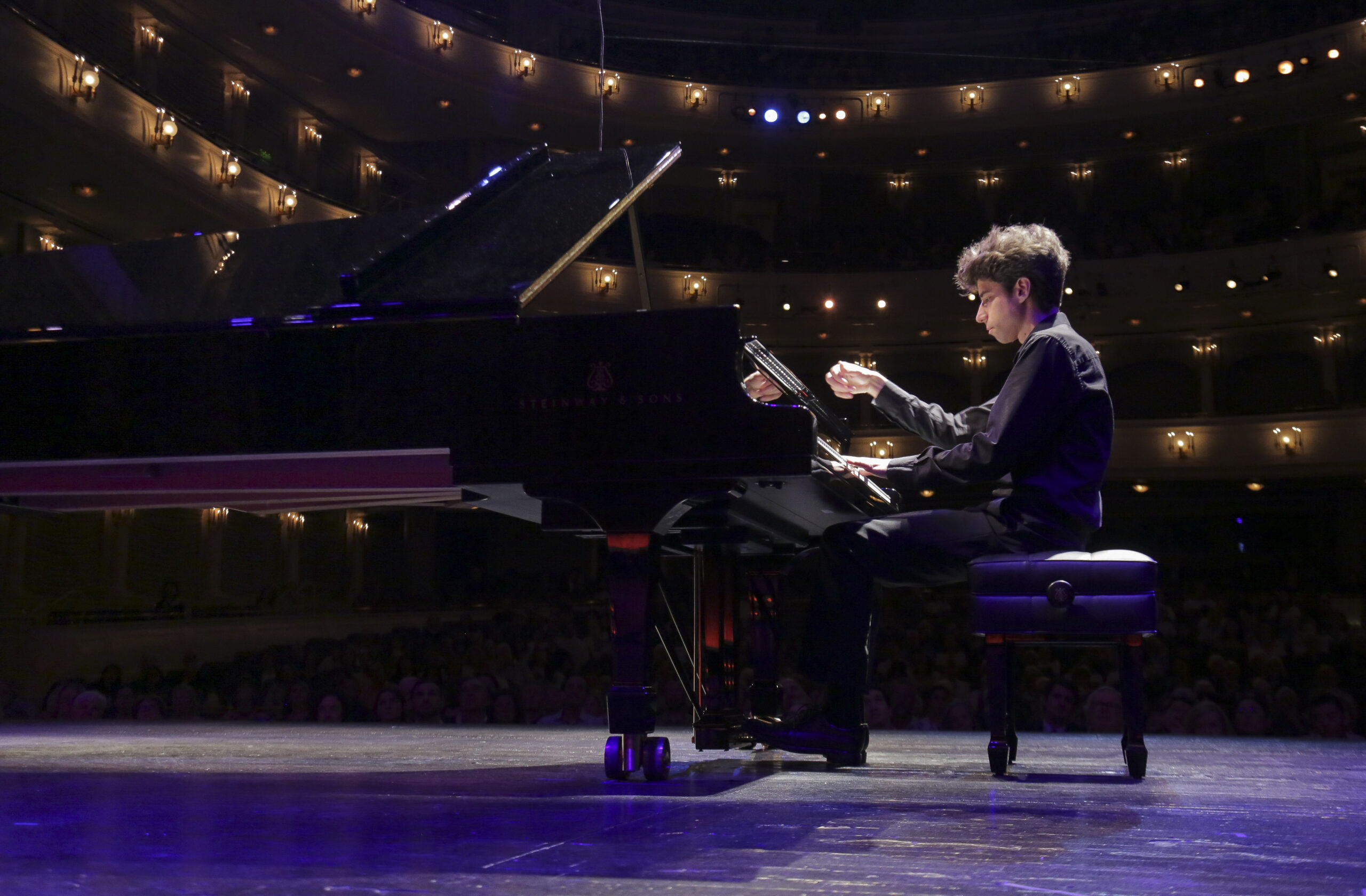
Vitaly Starikov in the semifinal round of the Seventeenth Van Cliburn International Piano Competition. Photo: Ralph Lauer
Thirty-year-old Vitaly Starikov performed Chopin’s Études op.25 with the craftmanship of an aged master. Each phrase of the 12 studies was shaped with infinite finesse and refinement. A poet of the softest dynamic nuances, Starikov floated through some of the technically most challenging pieces like a butterfly through a field of flowers. Yet, this was precisely his weakness. As much as one admires his style and sensitivity, Starikov did not sustain the emotional arc of these etudes with the necessary power, charisma, and presence. The punch line never came, and his stage presence diminished as the recital continued.
The Schubert-Liszt did nothing to carry the recital forward, and Prokofiev’s Sonata op.83 n.7 sounded empty and indifferent. An undeniably talented pianist, Starikov lost himself today. The Andante caloroso sounded too romantic, like a schmaltzy piece by Joseph Strauss. Finally, the famous Precipitato was well constructed around the idea of gradually increasing dynamic intensity, yet no amount of head bobbing and hammering of the keys could replace the absence of genuine drama.
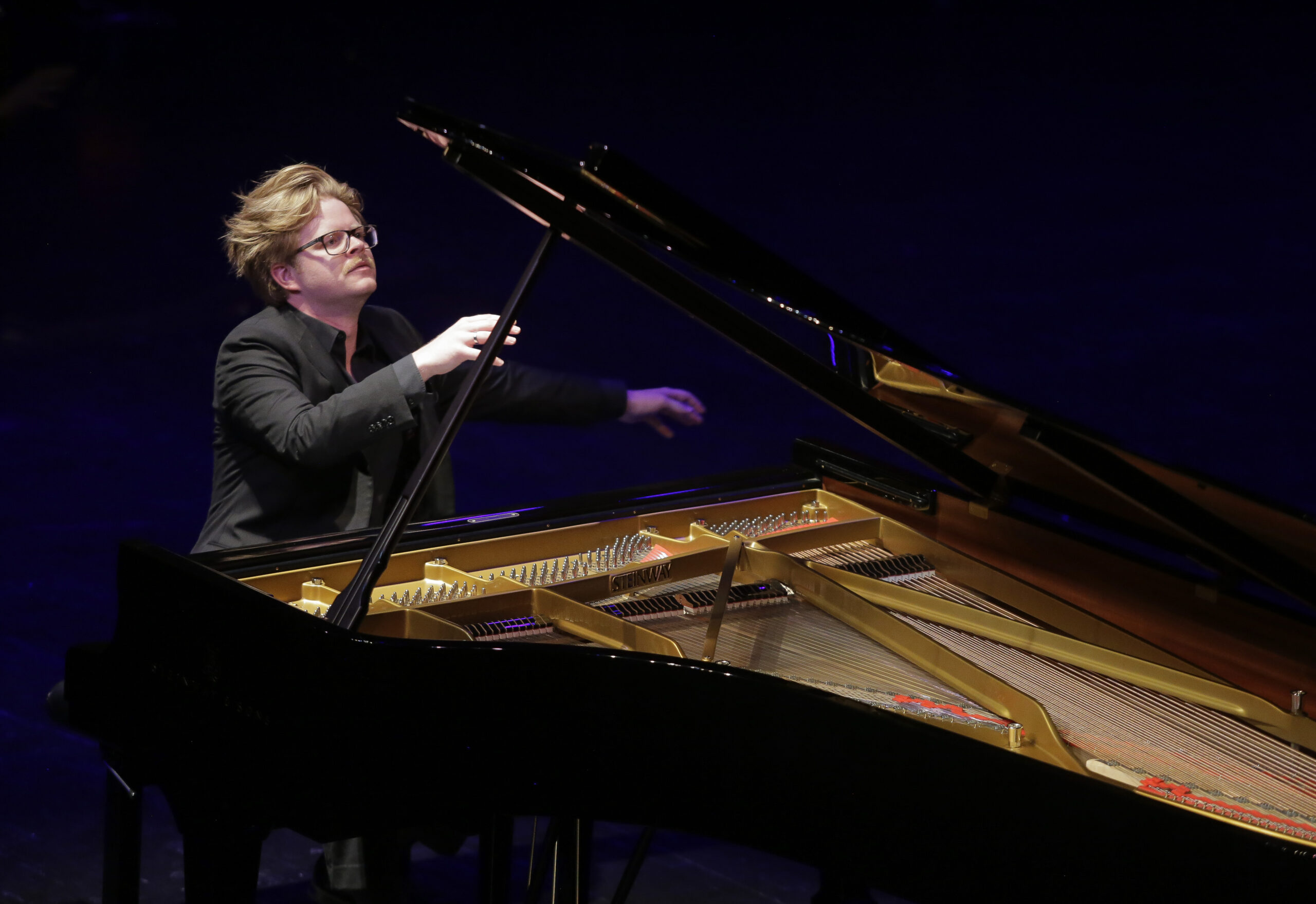
Carter Johnson in the semifinal round of the Seventeenth Van Cliburn International Piano Competition. Photo: Ralph Lauer
Following this performance, came 28-year-old Carter Johnson. He played a challenging program of Schumann, Scriabin, and Hindemith with depth and engagement. His stage presence was unassuming yet self-assured. Johnson has a rare mind capable of dealing with the most complex musical material. Throughout his recital, he showed himself as a high IQ performer with the ability to connect emotionally with each work.
Much respect is owed to his repertoire choices, which brought the best out of him as well as out of the music he played. Schumann’s Davidsbündlertänze demonstrated his natural, sincere musicianship, attentive to all the beauties, whims, and affective states displayed by the composer’s alter egos, the sweet Eusebio, and the demonic Florestan. Scriabin’s Preludes op.74 were captivating. Finally, Hindemith’s third sonata, a daring choice for a competition, was commendable in every respect. Johnson’s interpretation was technically flawless if a touch too romantic and indulgent at times. Overall, a very strong and serious musician with real charisma.
Sunday, June 1: Angels and Demons
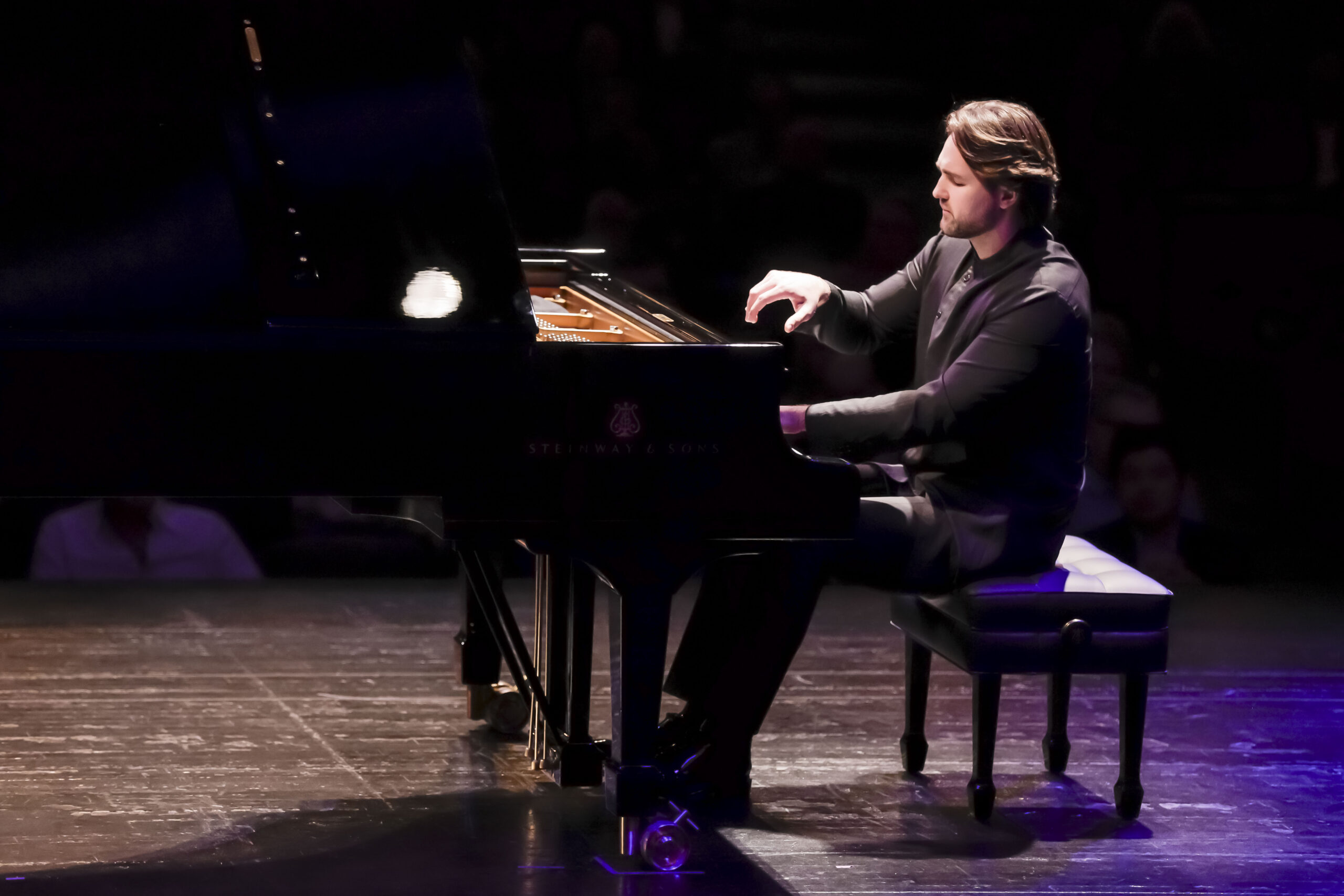
Philipp Lynov in the semifinal round of the Seventeenth Van Cliburn International Piano Competition. Photo: Brandon Wade
Just when we thought all was said and done, Russia’s 26-year-old Philipp Lynov delivered what may have been the best overall recital in terms of his preparation, focus, and flawless playing.
Ravel’s Miroirs was a perfect match for him. The first two movements were spellbinding, and his crystalline sound was among the best at the competition. Lynov’s playing is objective, selfless, existing for the only purpose to create great art. The notorious Alborada was frightfully accurate and hair-raising like the most legendary performances can be. Throughout it all, he exuded a quiet power. It was the perfect rendition of Miroirs and a moment of pure creation.
In Prokofiev’s Sonata n.8 op.84, Lynov’s total command of the music, the instrument, and the stage turned him into a possessed demon. He captivated the audience’s attention through his fresh and committed performance. At 26, Lynov is an artist with integrity, power, and maturity. He does well to avoid using his power for show and must be commended on his discipline.
However, playing a recital of only 20th-century technically challenging repertoire has its risks: it allowed Lynov to hide behind his superb craft. Just as he didn’t let us up-close-and-personal with his Mozart, Lynov never allowed himself to be vulnerable in his solo playing either. Yet, that is necessary to build trust between an artist and the public. A story with wounds, sorrows, and imperfections is the key to a shared artistic experience: catharsis. Food for thought.
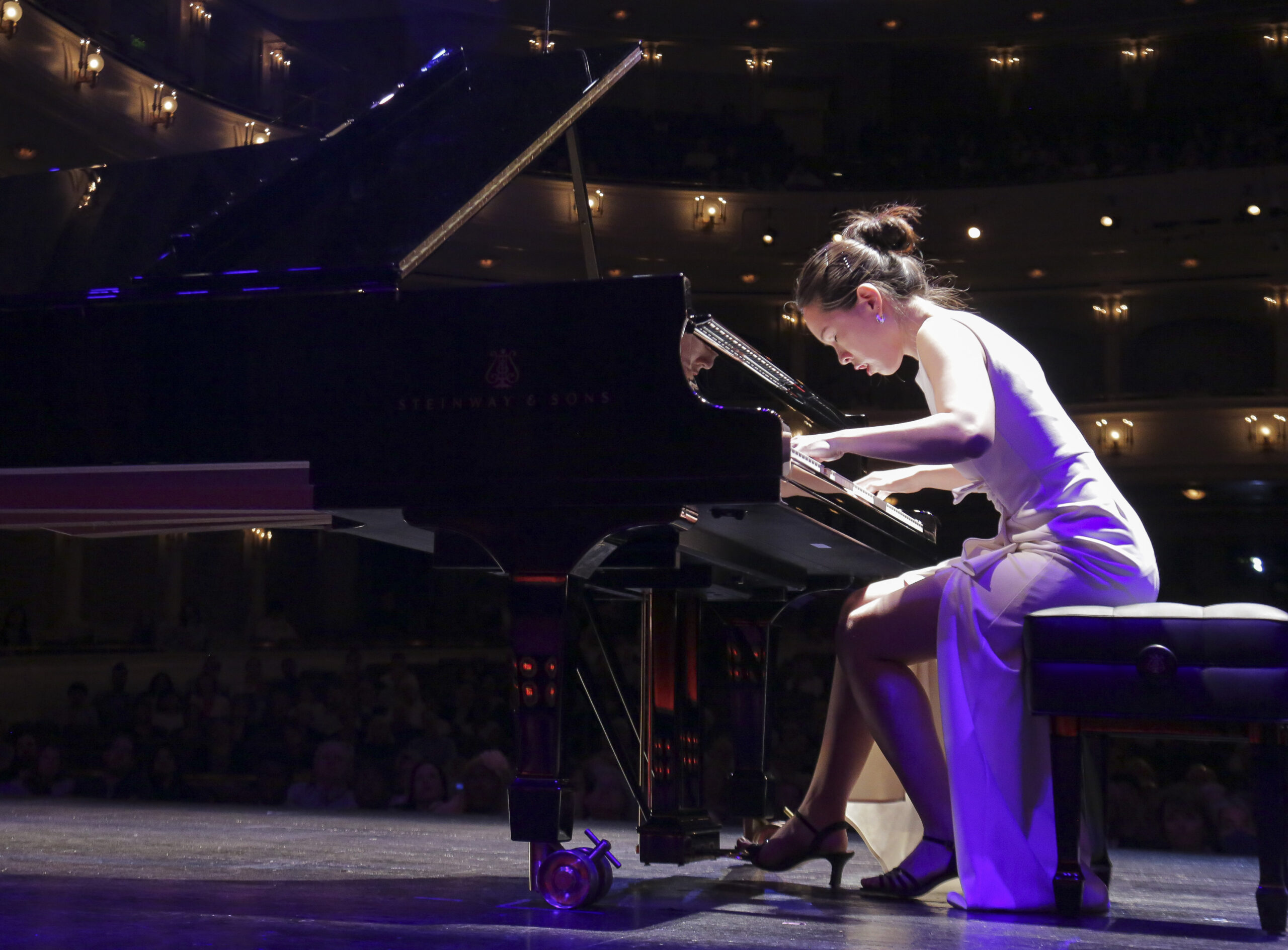
Chaeyoung Park in the semifinal round of the Seventeenth Van Cliburn International Piano Competition. Photo: Ralph Lauer
The next pianist could not be more contrasting. South Korea’s 27-year-old Chaeyong Park came in wearing an angelic white dress, compared to Lynov’s monk like black shirt; she played Bach and Beethoven, a counterpoint to Lynov’s Ravel and Prokofiev; she was almost balletic in her gestures, compared to Lynov’s spartan demeanour. Back-to-back—they were the yin and yang.
Park opened with a sincere and inspired performance of Bach’s Jesu, Joy of Man’s Desires, arranged by Myra Hess. A few qualms could be raised about her Scriabin: narrow dynamic range, highly gestural performance at the expense of an inner expression. The first and second movements of Beethoven’s monumental Hammerklavier seemed to prolong that impression: after a strong opening, her palette was impressionistic, and she didn’t seem to have the power necessary for this sonata. The second movement was almost too refined and subtle, lacking a more grounded and earthy approach, the hallmarks of a Beethovenian sound. Instead, her touch was light, her passages felt ornamented, and the many dynamic hairpins distracted from the longer line.
While Park started the third movement Adagio almost as if playing Chopin, her performance suddenly opened up and we got a touch of heaven. From the middle of the Adagio until the end of the Hammerklavier, she played as if possessed by an angel. Park showed such inner power, drive, fearlessness, and unwavering determination. Her performance was one of—if not the most compelling of the entire solo recital phase. Any pianist will recognize it: to play the Hammerklavier Fugue like Park did today, one needs cojones the size of Jupiter (forgive my crassness). Park’s courage and fearlessness impressed me more than any other performance in these semi-finals. All my admiration for an incredible feat.
Sunday, June 1: The Great Ones

Piotr Alexewicz in the semifinal round of the Seventeenth Van Cliburn International Piano Competition. Photo: Brandon Wade
The final two recitals brought two major players to the forefront of the competition. Poland’s 25-year-old Piotr Alexewicz opened his recital with the assurance of a pianist double his age. His demeanour at the keyboard reminded one of the legendary Emil Gilels as he produced round, full, powerful but never harsh sound. Alexewicz delivered Schumann’s Fantasie with complete assurance, sensitivity, sincerity, calm, and discipline. He demonstrated all the qualities for the highest level of musicianship: genuine and unforced musicality, storytelling, a wide colour palette, and broad dynamic range. His performance was so compelling that the few missed notes in a widely notorious passage of the Fantasy did not disturb in the slightest.
Alexewicz embarked on Chopin’s Sonata n.2 almost immediately after coming from backstage—an effective show of theatricality. He took one of the most (over) played works in the repertoire and made it his own, an impressive feat. The first two movements included some novel interpretive details and a heartfelt rendition. Then, in the third movement, Funeral March, his incredible pianissimo playing brought about moments of total immersion into another world. He skated along the piano in the last movement and brought to a brilliant close one of the most convincing interpretations of this work that I’ve heard. Sublime.
Ending the recital with Gershwin’s Three Preludes, Alexewicz showed us a little swagger: starting before the public got back to their seats after giving him a standing ovation. His style was spot on and his charisma, humour, and lightness made for the perfect close.
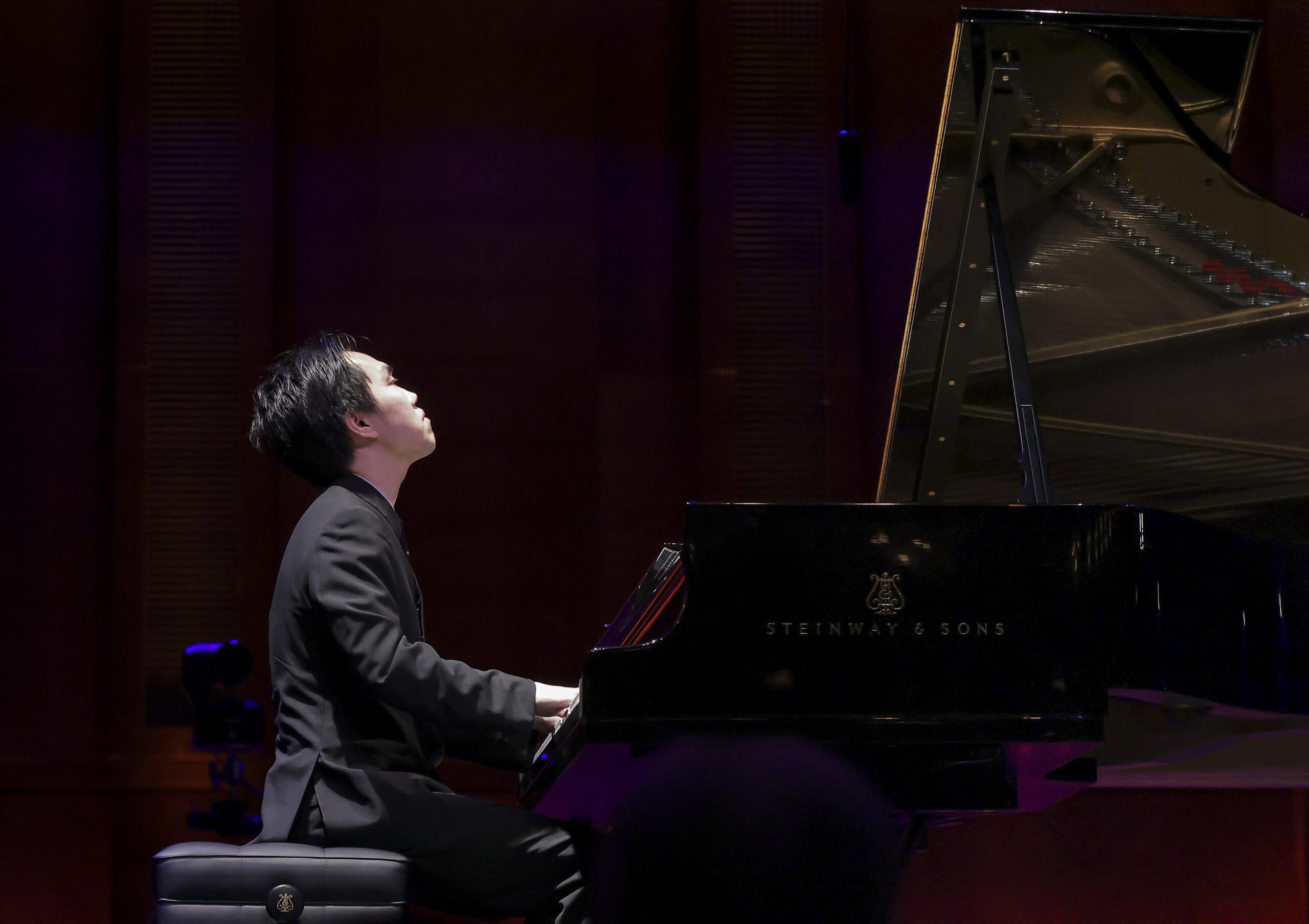
Yangrui Cai in the semifinal round of the Seventeenth Van Cliburn International Piano Competition. Photo: Ralph Lauer
The last semi-finalist was China’s 24-year-old Yangrui Cai. He started Prokofiev’s Romeo and Juliet with surprising lightness, bordering on the trivial. The great agility of his playing oscillated from extreme ease to extreme excitability before finding the right range. Around the Dance of the girls with lilies, Cai opened his soul, and touched us like very few semi-finalists had done. His love for the music was contagious. Cai wore his heart on his sleeve and carried us through one of the most heartbreaking and vulnerable of Prokofiev’s masterpieces.
The rest of Cai’s program was marked by his total abandon. With incredible agility and touching sincerity, Cai produced elegant playing and a lively control of dynamics in Adès’ Darkness visible. With this rarely heard work, Cai showed his character and courage to program music by a contemporary composer. An excellent choice and a brilliant work. Finally, Cai concluded his recital with an inspired performance of Ravel’s Gaspard de la nuit. He seduced with his light touch, genuine feeling, refinement. Playing like a real artist, he transfixed the entire hall. The demon exploded finally exploded in Scarbo, which brought the house down.
My list of best recitals:
- Piotr Alexewicz
- Yangrui Cai (favourite program)*
- Jonas Aumiller
- Philipp Lynov
- Evren Ozel
- Angel Stanislav Wang
- Chaeyong Park
- Aristo Sham
- Carter Johnson
- Yanjun Chen
- Vitaly Starikov
- Elia Cecino
My list of finalists:
- Piotr Alexewicz (10)—Poland
- Most consistent performer across both concerto and recital.
- Jonas Aumiller (9.75)—Germany
- Consistent across both concerto and recital.
- Carter Johnson (9)—Canada/USA
- Consistent across both concerto and recital.
- Yangrui Cai (9)—China
- Exceptional recital makes up for a forgettable concerto.
- Aristo Sham (9)—Hong Kong China
- Consistent across both concerto and recital
- Angel Stanislav Wang (9)—USA
- Outstanding Pictures and Appassionata, making up for a decent concerto.
For all of our Cliburn reports, articles and videos visit Spotlight | Cliburn 2025