This page is also available in / Cette page est également disponible en:
Français (French)
Welcome to Cityscapes
by Kaitlyn Chan and Hal Kowalewski
From sea to sea, Canada boasts beautiful natural landscapes and culturally-diverse cities. Our new
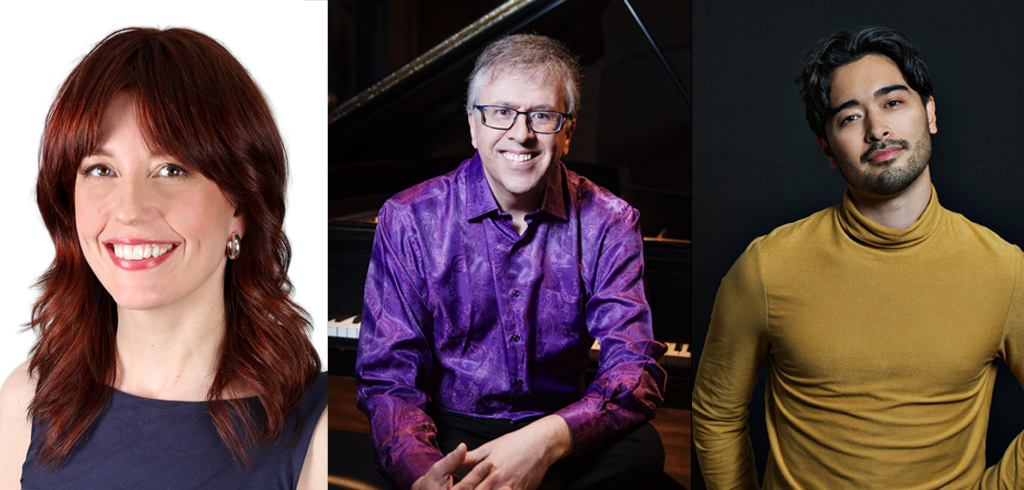
column Cityscapes will spotlight one Canadian city per issue, offering insight into its inspiring spots, music and arts scenes, and unique neighbourhoods. For our first edition, we invited three local arts leaders to promote a gem of the West Coast: Vancouver, B.C.
Ashlie Corcoran
Ashlie Corcoran is artistic director of the Arts Club Theatre Company, the largest theatre company in Western Canada. She directs both theatre and opera, working across Canada and internationally. Corcoran grew up in White Rock, a municipality within Metro Vancouver, and moved away for university. Returning to the city eight years ago, she now contributes to Vancouver’s rich arts scene in her role with the Arts Club and as a freelance director, working with companies such as Vancouver Opera.
Corey Hamm
Dr. Corey Hamm is in his 20th year as tenured full professor of Piano and Chamber Mu-sic at the University of British Columbia School of Music. In this role, he teaches advanced pianists, including 2024 Leeds International Piano Competition winner and B.C.-local Jaeden Izik-Dzurko. An internationally-touring concert pianist and recording artist, Hamm has commissioned, premiered and recorded more than 400 works by composers from all over the world.
Luka Kawabata
Nikkei-Canadian baritone Luka Kawabata grew up in Vancouver and is a recent alumnus of Vancouver Opera’s Yulanda M. Faris Young Artists Program. He has performed and collaborated with opera companies across Western Canada, including several Vancouver-based companies such as Vancouver Opera, City Opera Vancouver, and re:Naissance Opera. His ongoing recital series, The HAFU ハーフ Project, explores themes of identity, memory and culture through classical music.
Luka Kawabata’s Vancouver
“I will always have a connection to this city. These lands, these waters,” says Luka Kawabata of Vancouver, the site of his work as a performer, producer and arts administrator. Kawabata has spent most of his life in Vancouver, having emigrated to the city from Japan when he was six months old.
“I particularly emphasize the waters because I think that anyone who’s from the West Coast feels a connection to the ocean. Even when I lived in Ontario,” he confides jokingly, “I had to live right next to Lake Ontario. I thought, ‘Okay, I guess I can make this work.’”
Luka Kawabata in performance
While living in Ontario, Kawabata found his love for Vancouver. He returned to the city and quickly became a major contributor to the operatic scene as both a performer and a cultural leader, a trajectory he attributes to Vancouver’s universities and young-artists programs.
Like most Vancouverites, Kawabata is drawn to the abundant natural beauty of the city. But he also highlights the ways in which the sometimes-bleak conditions of the rainy city create a close-knit community and strong culture of camaraderie. In Vancouver, an event must have something special to draw residents out of their rain-induced hibernation.
For Kawabata, this something special is a sense of community. “People are very interested in building personal relationships and finding stories that they feel connected to. Vancouverites may disagree with this, but people are very warm here,” he says, referring to the stereotype that Vancouver can be an isolating or unfriendly city. “Vancouverites keep you at a distance if you’re a stranger,” he concedes. “I think that’s just a product of the rain here. But once you create a connection with them, they’re so loyal to you. They will support you, especially as a member of the Vancouver artistic community.”
Luka Kawabata at Boheme Rehearsal
Kawabata has fostered these close friendships within the production team of his recital series. The HAFU ハーフ Project, the baritone’s musical exploration of identity and community, makes reference to 千羽鶴 (“senbazuru”), the practice of folding paper cranes as symbols of peace, health and memory. Inspired by this tradition, Kawabata began folding paper cranes on his own until his set designer proposed that they cover the set with the thousand cranes that traditionally grant a blessing. Kawabata speaks fondly of the crew’s dedication to creating these cranes together throughout the production process.
“This is a very personal part of my family’s culture,” says Kawabata, “and to realize that it’s okay to bring people into it—sharing a culture that feels very personal—I don’t think there’s words to describe what it means, especially as a Japanese Canadian.”
Outside of The HAFU ハーフ Project, Kawabata and friend Perri Lo build community through Opera Pubs, a monthly community meet-up which returns to the social roots of opera. Audience members—who sit only feet away from performers—are encouraged to react to the music, rather than passively observe it. Having sung at these events himself, says Kawabata, “as a performer, there’s nothing like seeing joy, or seeing an overwhelming emotion that you’re trying to convey. That’s what, I think, drives every artist to give more during a performance.”
Performers at an Opera Pub in Vancouver
For Kawabata, Vancouver holds the rich communities that allow him to explore his identity, both on and off stage. “All of us can benefit from being inspired by the constantly changing world around us,” he insists. Kawabata finishes his statement with a cheerful “Everyone should come visit, and everyone should support the arts in Vancouver!”
Neighbourhoods
Olympic Village
Olympic Village from across False Creek (2010) Photo: Wikimedia
Corcoran says that her favourite Vancouver neighbourhood is the mixed-use community called Olympic Village. Situated on the southeast edge of False Creek, Olympic Village was built to house international athletes and Olympic officials for the 2010 Winter Olympic Games. This neighbourhood features modern architecture, waterfront views, and innovative energy efficiency and sustainability systems.
“I love how walkable it is,” says Corcoran. “You can stroll along the seawall, watch the boats, and still feel connected to the city. It’s the perfect mix of urban life and nature.” Corcoran finds herself spending a lot of time here as she lives and works in the area. Luckily, she finds the community always feels fresh and inspiring.
Steveston Village
Steveston Museum (2016) Photo: Wikimedia
Steveston, at the mouth of the Fraser River, is a quaint fishing village with plenty of historical sites and museums. The neighbourhood was designated a heritage conservation area in 2009 as it was once a booming centre for salmon fishing and canning, earning the nickname “Salmonopolis.”
Hamm, who now resides quite close to the village, finds the area a nice place to live. He especially enjoys visiting Little Mexico Cantina, a Mexican restaurant located in a residential neighbourhood. Hamm explains that good Mexican food can be hard to find in Vancouver, but this place is one of the best. “We were surprised to discover it on our first of many visits,” Hamm says. “We asked ‘How long have you been here?’ [and]they answered ‘30 years!’”
West End
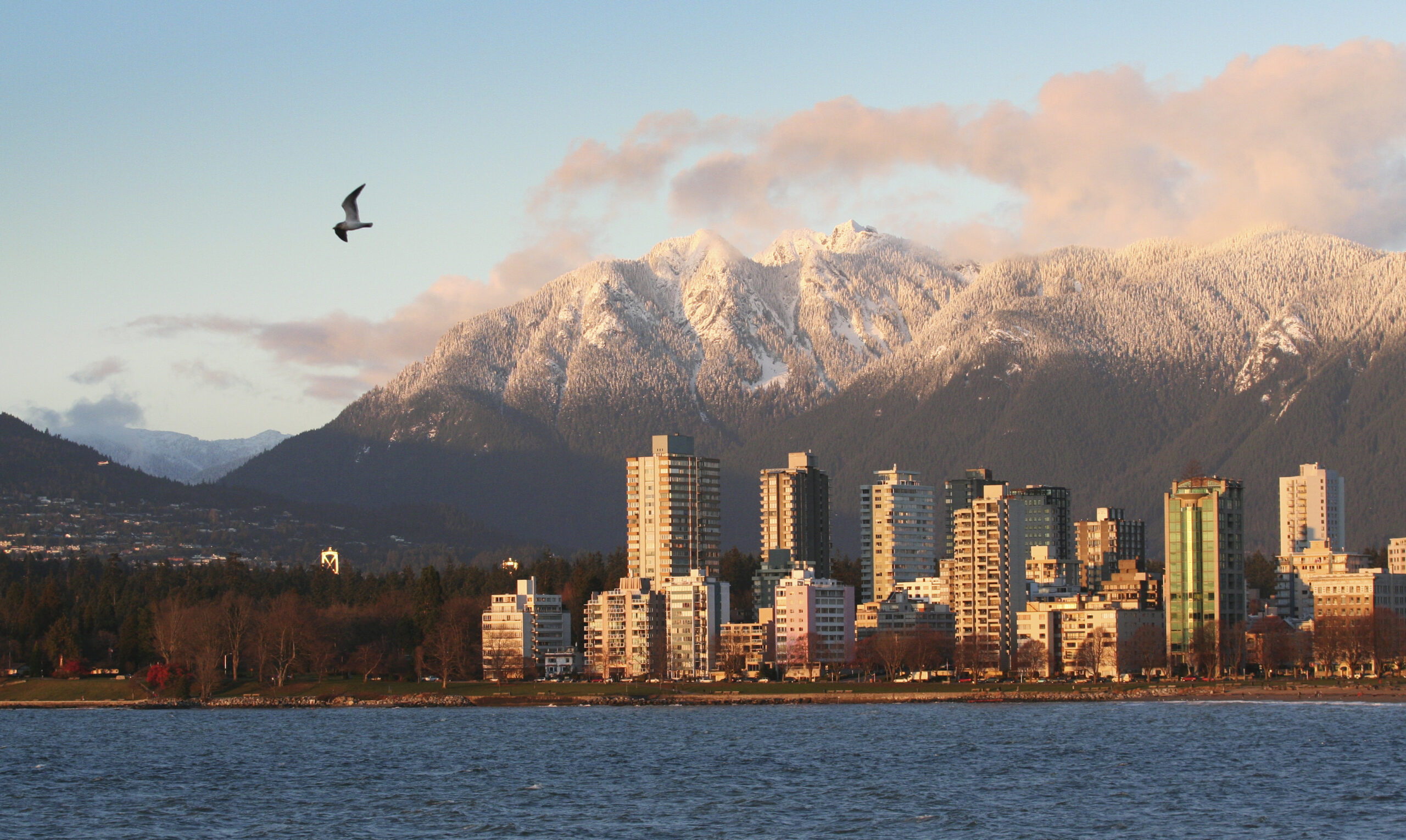
The West End from across English Bay. Photo: Wikimedia
Vancouver’s West End lies west of downtown and is surrounded on three sides by water: English Bay, Coal Harbour, and Lost Lagoon in Stanley Park. Located in the most densely populated part of the lower mainland, the West End features many shops, restaurants, and recreational amenities within walking distance. “Something that I love about this city is that you’re able to get around quite easily,” says Kawabata.
With Stanley Park at its northern border and two beaches along its western side, this neighbourhood blends city life with natural beauty. “Almost every evening in the summer, [I] end up at the beach to have dinner, spend time with friends and loved ones, relax, read and anything else you can think of,” says Kawabata, himself a West End local who lives only a five-minute walk from the shore.
A Font of Inspiration
“I believe that inspiration can hit you in any place, at any moment, and it’s your job as an artist to be ready to receive it,” says Kawabata. For many Vancouverites, the city’s abundant connections to nature are the greatest source of inspiration.
“You can go swimming in the ocean and half an hour later go skiing in the mountains,” says Hamm. He and wife Angelique Po, the music director and organist at St. Andrew’s Wesley United Church, like to walk the downtown and Steveston seawalls.
The view from Spanish Banks. Photo: Kaitlyn Chan
Corcoran draws inspiration from Spanish Banks, a series of soft-sand beaches which overlook Vancouver’s downtown skyline. “There’s something about the fresh ocean air and the sound of the waves that helps me clear my head and get re-energized,” she says about her visits to the paved oceanside trails with her son and their dog.
“I feel very inspired every time I climb one of the surrounding mountains in the area,” says Kawabata. “Nothing like some moderate to heavy cardiovascular fatigue to get you out of your head.”
“Of course,” Hamm clarifies, “being a pianist, I put in quite a few hours in the corner with the piano bench at home.” He draws significant inspiration from his musical household shared with Po.
Where to Listen
Corcoran recommends:
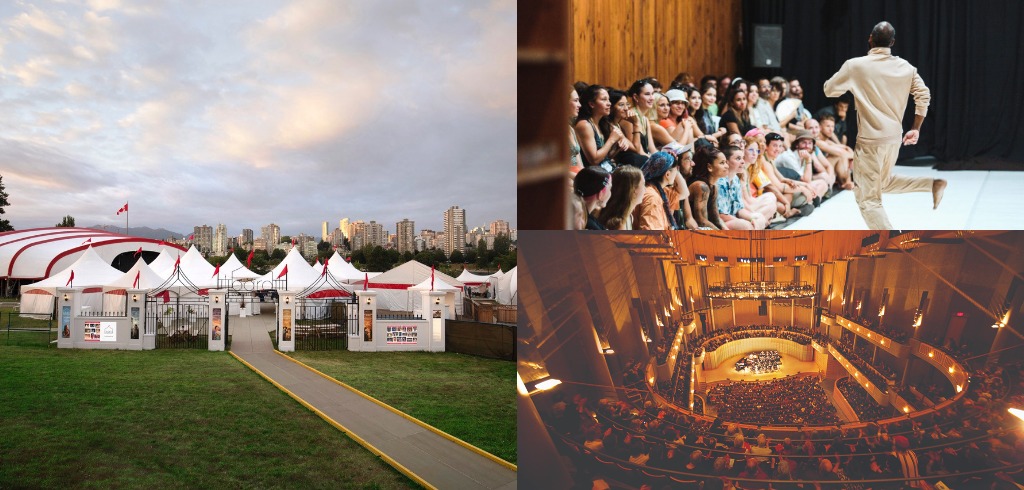
Bard on the Beach
The Cultch
Vancouver Opera
Photo: Tim Matheson
Bard on the Beach:
A professional Shakespeare festival presented in Vancouver’s Vanier Park, overlooking English Bay and the downtown skyline.
“… They’re not afraid to take risks, and it really shows. … There’s a strong sense of collaboration and experimentation in the city, and it’s exciting to see how local performers and creators are constantly finding new ways to connect with audiences.”
Ashlie Corcoran
Hamm recommends:
UBC School of Music
The Vancouver Chopin Society
Vancouver Recital Society
Vancouver Symphony Orchestra
Pacific Opus Festival
Vancouver Piano Sessions
Photo: Tim Matheson
UBC School of Music:
“Getting to work with such tremendous local musicians is a privilege, and Vancouver is a real Piano City, so my piano students are astounding. … Seeing [our]students perform so beautifully in our city’s major halls like the Chan Centre and the Orpheum is very gratifying, and playing there myself is fun, too!”
Corey Hamm
Kawabata recommends:
PuSh Festival
rice & beans theatre
Asian Canadian Theatre
re:Naissance opera
because i love the diversity (2024) Photo: Olga Segura
PuSh Festival:
An interdisciplinary arts festival aiming to promote social change by bringing together artists from numerous locations and disciplines.
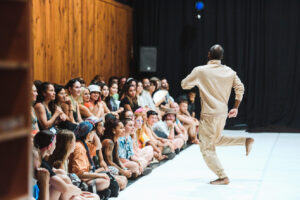
“[Through PuSh], I’ve seen more contemporary dance than I ever could have expected to as an opera singer. … Sometimes, you have to get distracted in order to realize the complete picture of what your artistry can actually be.”
Luka Kawabata
This page is also available in / Cette page est également disponible en:
Français (French)


 Français (French)