This page is also available in / Cette page est également disponible en:
 Français (French)
-
Independent3
Songe
Vincent Bélanger, cello and compositions; Annabelle Renzo, harp; Amélie Moïse, soprano; Véronique Turcotte, violin; Étienne Lafrance, double bass
Independent, 2025
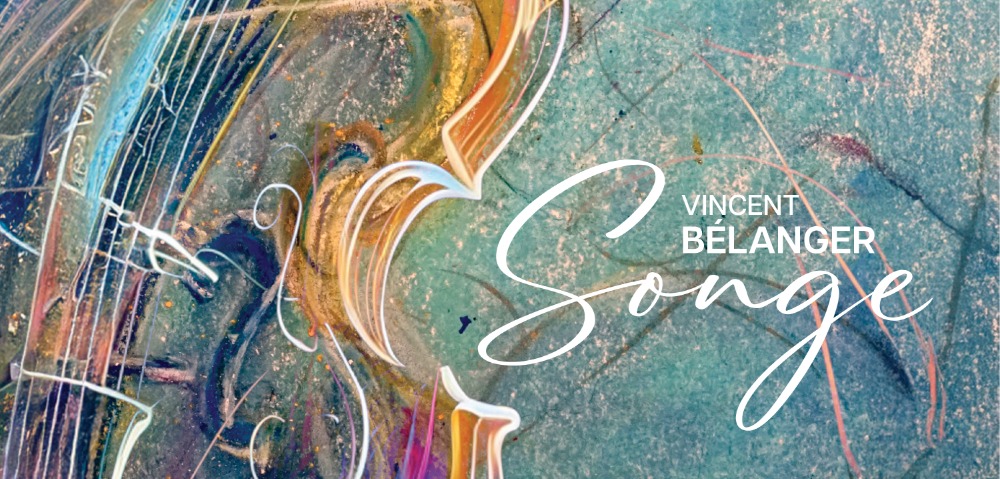
Vincent Bélanger says that his album Songe is a musical exploration of memories and dreams. “Each piece invites the listener to travel through landscapes of sound combining melancholy, sweetness and intensity,” he writes on his website. The first piece, Solitude, begins with the shimmering strings of Annabelle Renzo’s harp in a solo expressing sweetness and exquisite harmony. It’s the perfect introduction to a repertoire whose aim, as the composer writes in the liner notes, is to “push the boundaries of the classical” and to “make it accessible to a wide audience.”
We would perhaps be advised not to speak about Bélanger’s musical language as “pushing boundaries” when the history of music abounds with actual examples of avant-garde music by composers like Debussy and Stravinsky. Perhaps it’s because of the over-smooth formulas, almost banal, but the disc’s two subsequent pieces are redolent of something heard before: the famous theme of Rachmaninov’s Piano Concerto No. 2 and Por una Cabeza by Carlos Gardel. In the latter case, the resemblance is disconcerting and regrettable—especially because it is the album’s eponymous track and, hence, a recurrent background motif in many of its songs.
In Passage ancien we can clearly detect a pastiche of early music that makes us smile. Bélanger’s desire for accessibility is obvious. Dialogue, for cello and double bass, here and there incorporates counter-subjects that pleasingly embellish the Prelude from Bach’s Suite No. 1. Finally, Cantilène includes soprano Amélie Moïse and all the instruments for a comforting musical moment recalling a Disney happy ending.
Translation: Cecilia Grayson
This page is also available in / Cette page est également disponible en:
Français (French)