This page is also available in / Cette page est également disponible en:
 Français (French)
-
BIS3.5
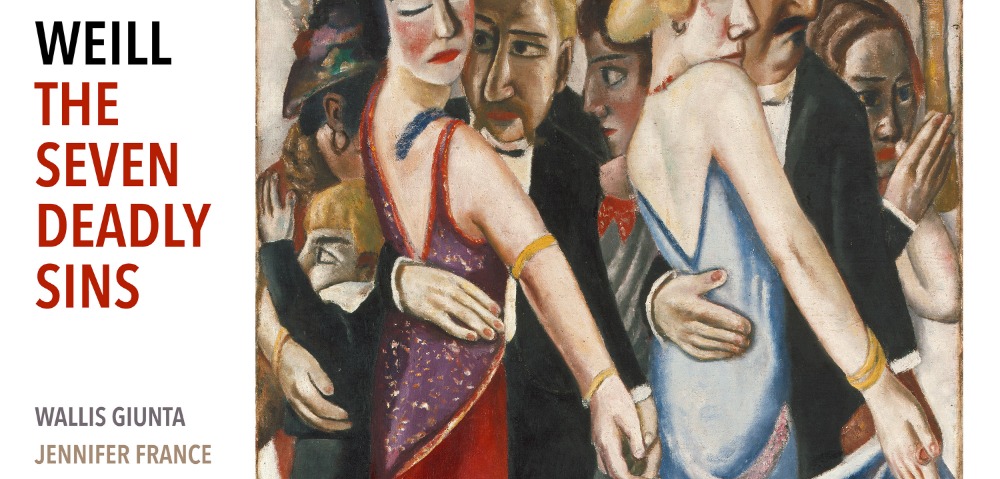
Weill: The Seven Deadly Sins
Wallis Giunta, mezzo-soprano; Jennifer France, soprano; Katarina Andreasson, violin; Benjamin Herzl, violin; Swedish Chamber Orchestra; HK Gruber, conductor
BIS, 2026
There are actually three pieces on this new SACD release of music by Kurt Weill. All are performed by the Swedish Chamber Orchestra, conducted by HK Gruber, with various soloists.
The first and longest is the “ballet with song,” The Seven Deadly Sins, given in the English translation by W.H. Auden and Chester Kalman. It tells the story of the two Annas, who perform, turn tricks and generally misbehave during a tour of major U.S. cities. All this in order to build a home in Louisiana for their critical and unhelpful family. Normally Anna I is sung and Anna II is a dancer with a few spoken lines. Here, both Annas are performed by mezzo-soprano Wallis Giunta. She sings in a clear, bright tone with excellent articulation so the words are perfectly audible. Unfortunately, this is less true for the Family (two tenors, a baritone and a bass). The Canadian mezzo and her orchestra get the style right. The instrumental music is a blend of fairly abrasive “classical” cabaret style and jazz but the singing is more classically operatic, with some spoken parts. Overall, the blend of voices and instruments is stylistically appropriate and effective.
The second piece is the rather strange The New Orpheus, described as a cantata for chamber orchestra, violin and soprano. It sets a weird text by Ivan Goll in an English translation by David Pountney. Orpheus is transported to contemporary Germany where he visits various settings: a circus, a cabaret and a veterans’ club, for example. Weill produces a musical pastiche for each setting. Orpheus finally finds Euridice at the railway station, but she’s a disappointment so he commits suicide. This is quite an early Weill work (1925) and the style owes little to either cabaret or, of course, to Broadway which he’d encounter later. The orchestral writing is quite abrasive with some jazz elements, especially in the second part. The vocal line is more lyrical and sung very nicely here by Jennifer France. Katrina Andreasson is the excellent solo violinist.
The final piece is the Concerto for Violin and Wind Orchestra (1924). It’s in a similar style to The New Orpheus but is perhaps more playful and certainly busier. The second movement in particular is almost scherzo like. The final movement, marked “allegro molto” though, becomes quite mysterious sounding. It’s an interesting discovery. The violin part here is nicely played by Benjamin Herzl.
The recordings were made on different dates in 2023 and 2024 at Örebro Concert Hall, Sweden. I listened to pre-release 96kHz/24bit digital files, though the commercial release will be as a physical hybrid SACD. There should be minimal differences between the review files and the SACD stereo track. It’s good. There’s plenty of detail and a solid sound stage with very good bass. There’s a booklet with notes, bios and full texts for the two vocal works.
It’s a useful disk with a good recording of the fairly well-known The Seven Deadly Sins—plus a chance to hear two much less well-known works.
This page is also available in / Cette page est également disponible en:
Français (French)